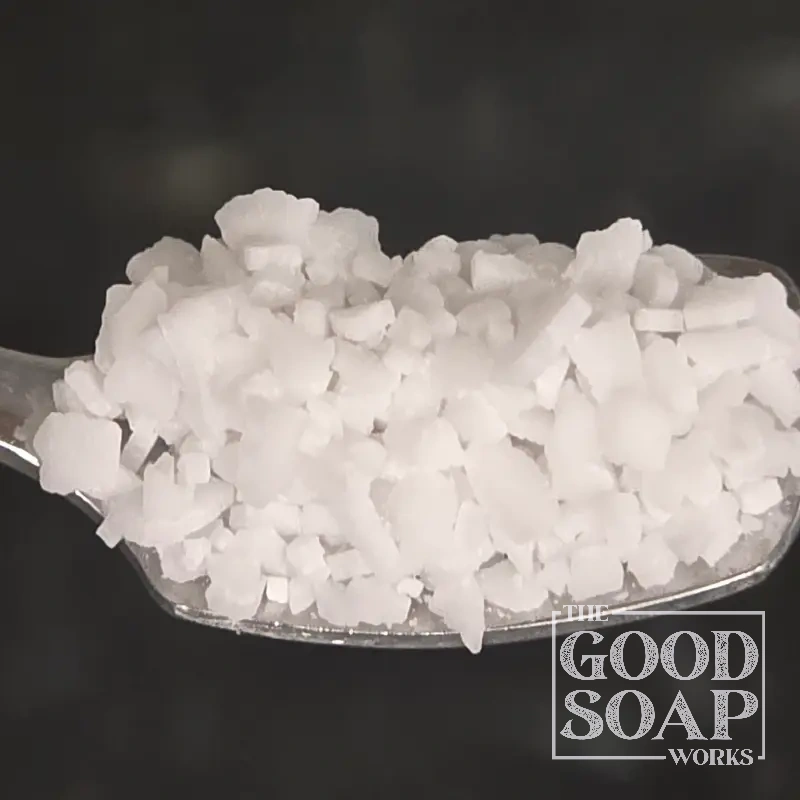
Long before chemistry had a name, people were making lye by doing something that sounds almost too simple: pouring water through wood ash. The alkaline liquid that dripped out the bottom — potash, they called it — was the foundation of soap for thousands of years. Potassium hydroxide is the refined, modern version of that ancient leachate, and it carries with it the entire history of soap making, from Roman fullers to colonial kitchen fires to the handcrafted bar sitting on your bathroom shelf today.
Potassium hydroxide is what transforms oils and butters into liquid soap. While its close cousin sodium hydroxide creates hard bars, potassium hydroxide produces a soft or fluid result — the kind you pump from a bottle or scoop from a jar. It’s a fascinating bit of chemistry that one small difference in a molecule’s structure produces such a different end product. By the time a properly made soap reaches you, the lye itself is completely gone, consumed entirely in the chemical reaction that created the soap.
Best Uses: Liquid soaps, soft soap pastes, and any pump or squeeze-bottle soap formula.